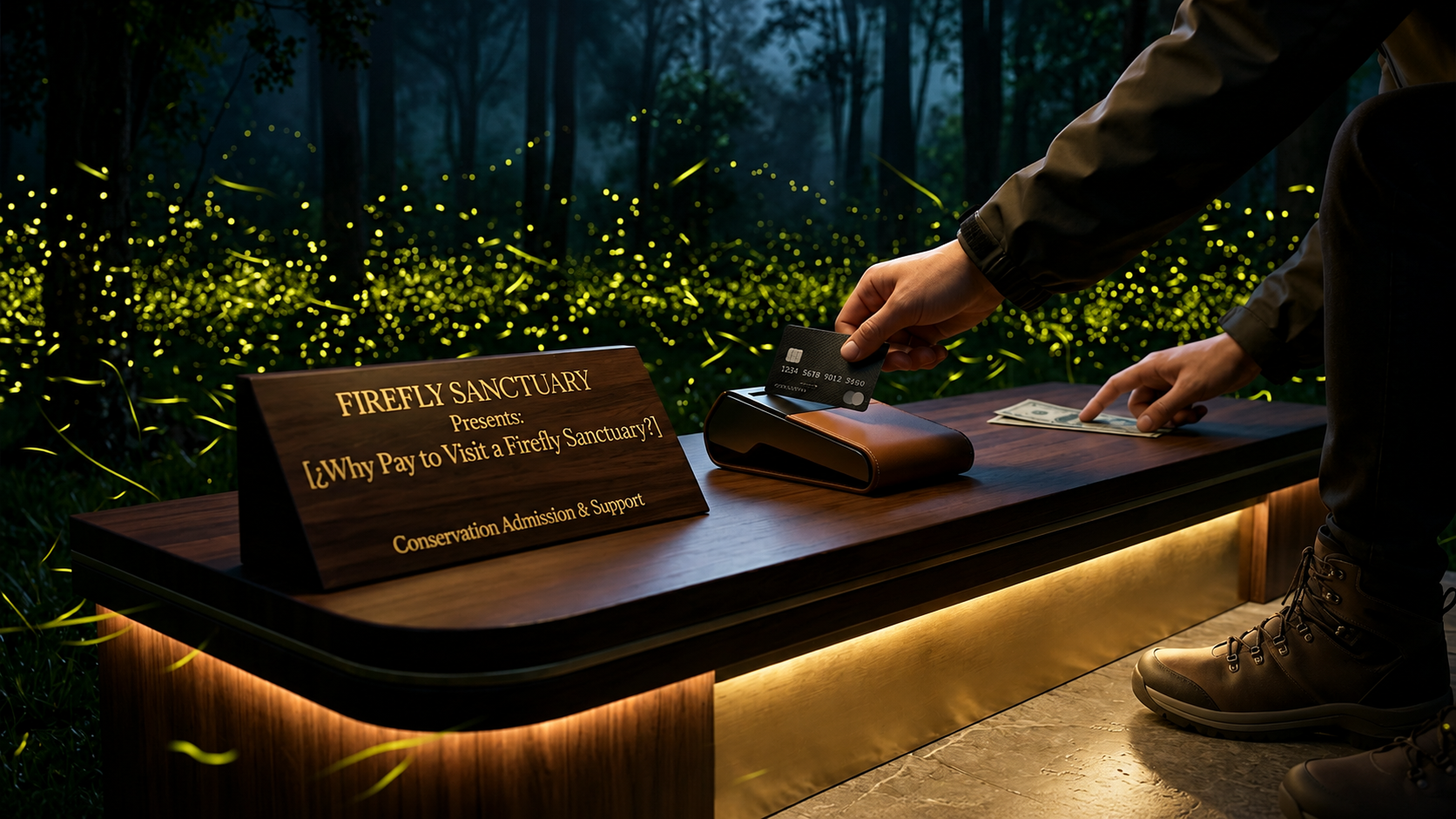
One of the most common questions people ask when planning a trip to Firefly Sanctuary is:
Why should I pay to visit if fireflies are a natural phenomenon?
It's a completely reasonable question.
After all, many travelers imagine they can simply walk into a forest, spot a few glowing insects, and enjoy the experience on their own.
But the reality is that a firefly sanctuary offers much more than access to nature.
Behind every guided experience is a significant effort to protect the habitat, preserve the ecosystem, and ensure visitors can enjoy the phenomenon safely and responsibly.
If you're still deciding which experience is right for your trip, feel free to contact us. We'll be happy to help you find the option that best matches your travel style and expectations.
Are You Really Paying to See Fireflies?
Not Exactly
The entrance fee isn't simply for viewing fireflies.
Instead, it helps support a carefully managed experience designed to protect both visitors and the environment.
When you visit Firefly Sanctuary, your contribution often helps support:
-
Ecosystem conservation
-
Trail maintenance
-
Visitor management
-
Guided experiences
-
Habitat protection
-
Sustainable tourism practices
Without these efforts, preserving the magic of firefly season would be much more difficult.
If you're still comparing options and wondering what you're actually paying for, take a look at What’s Included in a Firefly Tour (And What’s Not). Understanding what is included in a guided experience can help you better evaluate the value of your visit and choose the option that best fits your expectations.
Why Isn't It Recommended to Enter the Forest on Your Own?
Safety Comes First
Some people assume exploring the forest independently is the best way to experience nature.
However, doing so can create several problems, including:
-
Getting lost on unfamiliar trails
-
Entering protected areas
-
Disturbing firefly activity
-
Damaging sensitive vegetation
-
Increasing environmental impact
This is one of the main reasons organized tours exist.
They help visitors enjoy the experience while minimizing harm to the ecosystem.
💡 Explore guided experiences that combine nature, conservation, and expert guidance to help you make the most of your visit to Firefly Sanctuary.
Protecting a Fragile Ecosystem
Fireflies are highly sensitive creatures.
Their reproduction and behavior can be affected by excessive:
-
Noise
-
Artificial light
-
Uncontrolled visitor traffic
-
Habitat disturbance
Even small disruptions can impact future firefly populations.
Guided tours and controlled access help ensure that these incredible insects continue to thrive year after year.
By visiting responsibly, you're helping preserve one of nature's most fascinating spectacles.
What Does the Admission Fee Usually Include?
Depending on the experience you choose, your visit may include:
-
Controlled access to the forest
-
Guided assistance
-
Visitor orientation
-
Organized logistics
-
Facilities designed to welcome guests responsibly
Pricing varies depending on the package and services selected.
Is It Worth Paying?
That's the Real Question
Most visitors aren't really asking how much it costs.
What they want to know is:
Is it worth the investment?
The answer depends on what you're looking for.
When It Usually Feels Worth It
For people seeking:
-
Nature experiences
-
Relaxation
-
Memorable moments
-
Romantic getaways
-
Family-friendly adventures
The experience often exceeds expectations.
Watching thousands of fireflies illuminate a dark forest is something few people ever forget.
When It Might Not Be the Right Fit
If you're looking for:
-
Theme parks
-
Artificial attractions
-
Fast-paced entertainment
-
Urban nightlife
Then a firefly sanctuary may not be what you're expecting.
The beauty of the experience lies in its authenticity and connection with nature.
How to Get More Value from Your Visit
Staying Nearby Can Make a Huge Difference
One of the most common mistakes visitors make is trying to complete the entire experience in just a few hours.
Many travelers end up:
-
Tired
-
Rushed
-
Driving late at night
-
Missing out on other activities
That's why many guests choose to combine their firefly tour with nearby accommodations.
💡 Explore packages that combine firefly tours, accommodations, and complementary activities to maximize the value of your visit.
Why Glamping Has Become So Popular
Glamping allows visitors to:
-
Stay closer to the forest
-
Enjoy nature for longer
-
Avoid unnecessary travel
-
Create a more immersive experience
It's about much more than having a place to sleep.
It's about extending the experience and enjoying the destination at a slower pace.
Many travelers contact us before booking to compare accommodations, tours, and activities based on their budget and travel goals.
Other Activities You Can Combine with Your Visit
If you're already making the trip, many visitors choose to enhance their experience with additional activities.
Mushroom Foraging Tours
Perfect for travelers who want to continue exploring the forest ecosystem.
Relaxation Experiences
Many guests enjoy combining nature with wellness, rest, and disconnection from daily routines.
Campfires
One of the most popular ways to end the day after a firefly tour.
How to Compare Prices the Right Way
Don't Focus Only on Cost
One of the biggest mistakes travelers make is choosing an experience based exclusively on price.
When comparing options, it's important to also consider:
-
Organization
-
Comfort
-
Logistics
-
Location
-
Quality of the experience
The cheapest option isn't always the one that provides the best value.
Questions You Should Ask Before Booking
Before reserving your visit, consider asking:
-
What is included in the experience?
-
How does the tour work?
-
Are accommodations available nearby?
-
What additional activities can I enjoy?
-
What is the easiest way to get there?
The more informed you are, the easier it will be to choose the experience that's right for you.
💡 Book your firefly tour and accommodations in advance to enjoy a more comfortable, organized, and complete experience.
Why Do So Many People Return Every Season?
Because every visit is different.
The forest changes.
Weather conditions vary.
Firefly activity fluctuates throughout the season.
These natural variations create a unique experience every time, encouraging many visitors to return year after year.
Before booking your trip, we also recommend reading Which Firefly Sanctuary Should You Choose in Tlaxcala?. It compares different experiences and can help you find the sanctuary that offers the best combination of conservation, comfort, and unforgettable firefly viewing opportunities.
Conclusion
Paying to visit a firefly sanctuary isn't simply about gaining access to a forest.
It's about supporting conservation, protecting a fragile ecosystem, and participating in an experience designed to preserve one of nature's most remarkable phenomena.
When you consider everything involved—from habitat protection and trail maintenance to visitor safety and environmental stewardship—many travelers find that the value goes far beyond the admission fee itself.
If you're looking for personalized guidance while planning your visit, we'd be happy to help you find the perfect combination of tours, accommodations, and activities for your trip.
Frequently Asked Questions
Why do firefly sanctuaries charge admission fees?
Admission fees help support conservation efforts, trail maintenance, visitor management, and habitat protection.
Can I enter the forest without a guided tour?
Organized tours are strongly recommended because they help protect the ecosystem and provide a safer experience.
What is usually included in the entrance fee?
Most experiences include controlled access, visitor guidance, and organized logistics.
Is visiting a firefly sanctuary worth the cost?
For travelers seeking nature, relaxation, and memorable experiences, the value often far exceeds the price of admission.
How do admission fees help protect fireflies?
They fund conservation efforts, visitor management, habitat protection, and sustainable tourism practices that help preserve firefly populations for future generations.